










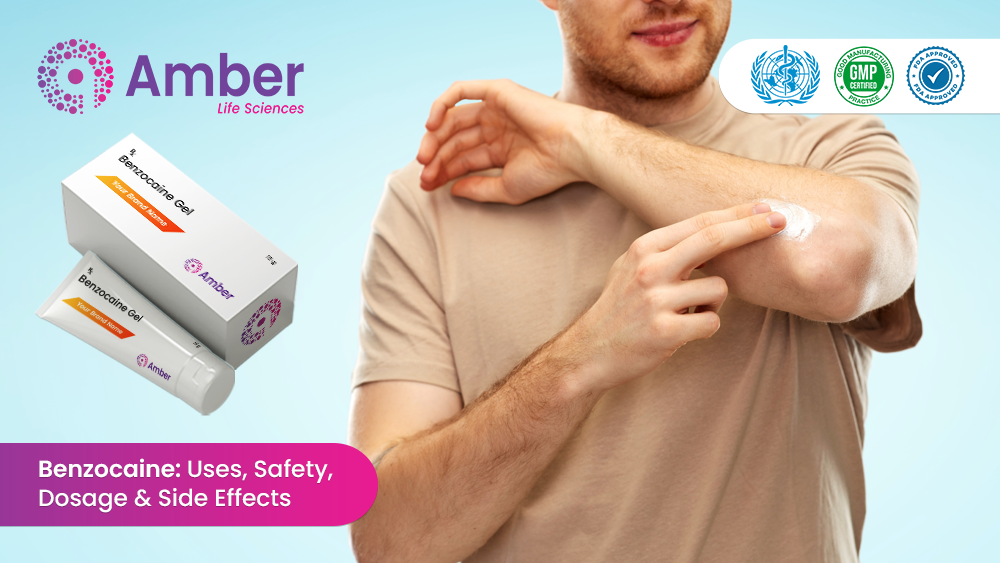
Benzocaine is a widely used local anesthetic that helps numb the skin or mucous membranes to provide short-term relief from pain, irritation, or inflammation. It works by blocking nerve signals, making it a go-to treatment for various minor conditions affecting the skin, mouth, and throat.
What Is Benzocaine Used For?
Benzocaine is included in many over-the-counter products designed to relieve pain caused by:
- Minor skin injuries such as cuts, scrapes, and burns
- Insect bites and stings
- Toothaches, teething pain, and canker sores
- Throat discomfort from sore throats or irritation
- Sunburns and denture irritation
Common brand names include Orajel®, Anbesol®, and Solarcaine®, among others.
How Benzocaine Works
Benzocaine functions by blocking sodium channels in nerve endings. This prevents the nerves from sending pain signals to the brain, resulting in a temporary numbing effect at the site of application.
Chemical Name:
- Ethyl 4-aminobenzoate
Available Forms:
- Gels and creams
- Ointments and sprays
- Lozenges or oral pain relievers
Recommended Usage
Benzocaine is intended for external or oral use only, depending on the product form.
- Apply a thin layer to the affected area
- Do not exceed the recommended dosage or frequency
- For lozenges, follow the package directions on timing and intervals
Important: Do not apply to large surface areas or broken skin unless instructed by a healthcare provider.
Potential Side Effects
Mild Side Effects:
- Slight burning or stinging upon application
- Redness or tingling in the treated area
Serious Reactions (Seek Immediate Help):
- Allergic reactions: Swelling, rash, itching, or dizziness
- Methemoglobinemia: A rare but dangerous condition where oxygen delivery in the blood is impaired
Symptoms: Pale skin, fatigue, rapid heartbeat, shortness of breath
More common in infants and young children
Note: The FDA advises against using benzocaine in children under 2 years due to the risk of methemoglobinemia.
Precautions & Warnings
Before using benzocaine products:
- Avoid applying to deep wounds or serious burns
- Do not use with other local anesthetics unless under medical supervision
- Pregnant or breastfeeding women should consult a doctor before use
- Wash hands after application to avoid accidental contact with eyes or mouth (if not intended)
Overdose & Drug Interactions
Overuse Risks: Excessive use or frequent application can cause systemic absorption, potentially leading to:
- Dizziness
- Irregular heartbeat
- Confusion
Possible Drug Interactions:
- Use cautiously with sulfonamide antibiotics, as benzocaine may interfere with their activity
Conclusion
Benzocaine is an effective option for relieving short-term pain and irritation, whether for skin discomfort, oral pain, or sore throats. While generally safe when used as directed, overuse or misuse can lead to serious side effects, especially in young children.
Always follow label directions, and consult a healthcare provider if symptoms persist or worsen.